The Priory orchard skeletal collection is currently housed in the Department of Anthropology, University College London, under the curation of Dr Lia Betti.
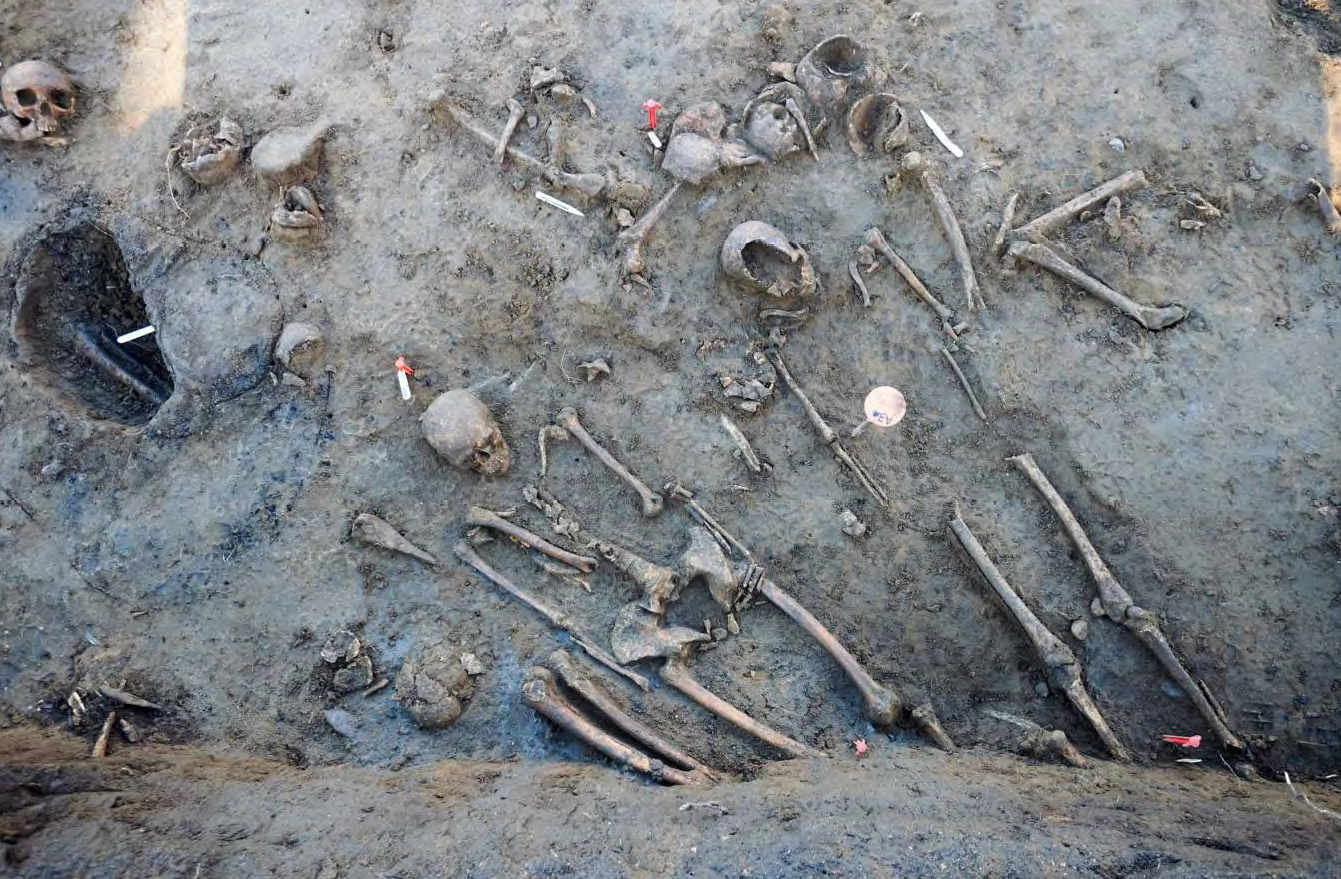
Copyright Surrey County Archaeological Unit (part of Surrey County Council)
The Priory Orchard osteological collection includes all the remains excavated in 2012–2015 from the Priory Orchard cemetery site in Godalming, Surrey. The cemetery was in use between c. 850–1200 CE. Most radiocarbon dates, however, are earlier than the mid 11th century CE and the overall evidence suggests that most burials are Late Anglo-Saxon. The cemetery was abandoned by the year 1200 CE and became the orchard of the priory, remaining untouched until construction of affordable housing started on the site in 2014.
As a rare example of a large rural cemetery of this age, the remains have exceptional research value.
On-going study on the collection

During the summers of 2015-2023, I offered an osteology workshop to Life Sciences students at the University of Roehampton that were interested in volunteering their time to clean and study the skeletons. It has been lovely to get to know my students better over long summer days in the lab, and they have been invaluable in helping prepare the collection for future research. They are too many to thank individually here, but their names are on the skeletons’ information recording sheets, available to future researchers that want to consult them.
We have cleaned and studied (i.e. recording of present bones, preservation, sex, age-at-death, stature, obvious pathologies) the 299 articulated burials. These include 23 children and 262 adults, of which 74 females and 128 males (others undetermined).
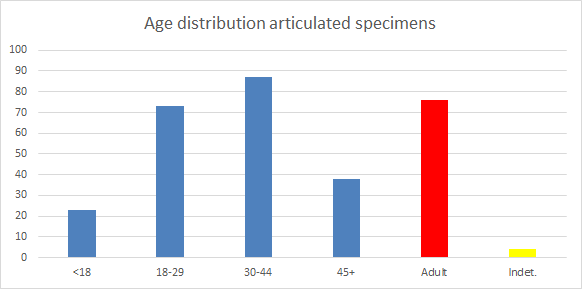
In addition to the burials, we have studied the remains of about 581 disarticulated individuals from disturbed burials, whose bones were often reinterred inside or near the burial that disturbed them. We expect this number to increase to around 800 individuals by the end of our study.

We have found signs of pathologies in several individuals. While we have not yet done a full palaeopathological study of the collection, there is evidence of head trauma caused by sharp objects in several individuals (potentially related to warfare) and unset fractures of the limbs (indicating lack of medical attention), as well as various diseases.

 Lia Betti